Software Engineering
Application Modernization Services
What is Application Modernization?
Application modernisation brings an old system up to date — the code, the architecture, the hosting or all three — so it is cheaper to run, safer to change and ready for what the business needs next.
The risk with legacy software is not that it stops working. It is that nobody dares to touch it. We modernise in small, reversible steps alongside the old system, so the business keeps running the whole time.
How it works
How We Modernise Without Disruption
The old system keeps running while the new one takes over, one piece at a time.
Assess
We map the code, data and dependencies, and where the risk is.
Wrap
We put a clean API in front of the old system.
Replace
Pieces are rebuilt one at a time behind that API.
Migrate
Data is moved and checked, with the old system as fallback.
Retire
The old system is switched off once nothing depends on it.
What we provide
Modernisation Services We Provide
From a code review to a full move to the cloud.

Legacy Assessment
A clear picture of the system, its risks and the best path forward.
- Code and architecture review
- Risk and cost analysis
- Modernisation roadmap
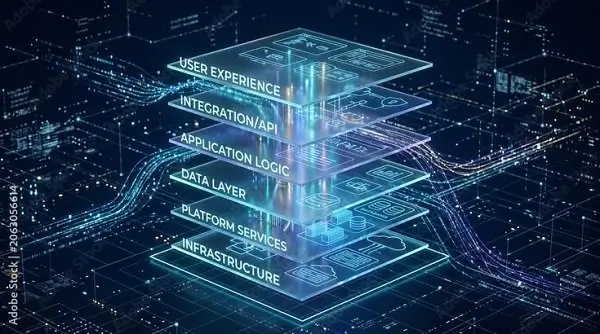
Re-architecture
Monoliths split into manageable services where it helps — and kept whole where it does not.
- Modular architecture
- API layer
- Strangler-fig migration

Cloud Migration
Applications moved from servers to the cloud, with the chance to cut running costs.
- Lift, refactor or rebuild
- Containers and CI/CD
- Cost optimisation
UI & Tech Upgrades
Old frameworks and screens updated so the system is supported and pleasant to use.
- Framework and language upgrades
- Modern, responsive UI
- Security patches
Under the hood
Old and New, Side by Side
A routing layer decides, route by route, whether the old system or the new one answers — so every step can be undone.
One route at a time
Traffic moves to the new system gradually, never all at once.
Always reversible
If anything looks wrong, the route flips back in seconds.
Measured cut-over
Errors and speed are compared before the old code is retired.
# Strangler pattern: move traffic route by routeroutes: - path: /customers target: v2-service # migrated - path: /orders target: v2-service # migrated rollout: 100 - path: /invoices target: v2-service rollout: 25 # 25% of traffic, watching errors fallback: legacy-app - path: /reports target: legacy-app # next quarter
Use cases
When It Is Time to Modernise
Legacy systems rarely fail loudly. These are the quiet signs it is costing more than it should.
Nobody can change it safely
Every change is slow and risky because the code is poorly understood.
Unsupported technology
The framework or language no longer gets security updates.
Rising hosting costs
Old servers and licences cost more each year.
It cannot connect
Modern tools and APIs cannot talk to the old system.
Technologies We Use
- .NET
- Java
- TypeScript
- Laravel


- Docker
- Kubernetes
- AWS
- Azure


- Modern Stack.NET, Java, TypeScript, Laravel
- ContainersDocker, Kubernetes
- CloudAWS, Azure
We work with the legacy stack you have and the modern stack you are moving to.
ContactOur process
Our Modernisation Process
Assess honestly, plan the safest order, then modernise in small steps you can reverse.
Assess
We review the code, data and hosting, and rank the risks.
Plan
We choose rebuild, refactor or move for each part, in order.
Modernise
We replace parts step by step, alongside the running system.
Retire
We switch off the old system once everything runs on the new one.
Start here
Not sure where to start with legacy?
Tell us about the system and what worries you most. We will suggest the safest first step and what it would change.
Why Proponent
Modernisation Without the Big-Bang Risk
We have seen rewrites fail. So we modernise in steps that each deliver value and can each be undone.

- Countries Served
- 70+
- Projects Completed
- 600+
- Hours Support
- 24x7
- Office Locations
- 5
Step by step
Small, reversible changes instead of one risky switch-over.
Business as usual
The old system keeps working until the new one is proven.
Data kept safe
Every migration checked and reconciled before cut-over.
Lower running costs
Cloud hosting and fewer licences once the move is done.
Secure and supported
Modern, patched technology replaces the unsupported stack.
Find out what your legacy system is really costing.
Share a little about the system. We will outline the risks and a modernisation path that fits your budget.