Software Engineering
API Development & Integration Services
What is API Integration?
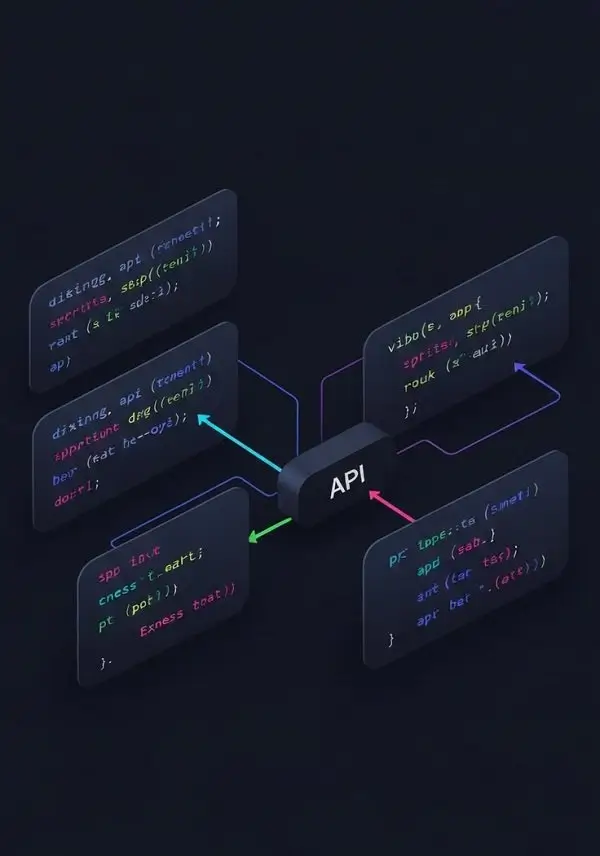
An API is how one system talks to another. Integration is the work of connecting your systems — CRM, ERP, payments, shipping, your own apps — so data moves between them automatically instead of being exported, emailed and typed in again.
Good integration is invisible: an order placed on the website appears in the warehouse, the invoice in accounting and the customer record in the CRM, correctly and within seconds. When something fails, someone knows before a customer does.
How it works
How Data Moves Between Your Systems
Every integration follows the same reliable path, with checks at each step.
Event
Something happens — an order, a payment, a new customer.
Transform
The data is mapped to the format the next system expects.
Validate
It is checked and authenticated before anything is written.
Deliver
It reaches the target system, retried if it is briefly down.
Monitor
Every call is logged, and failures raise an alert.
What we provide
API & Integration Services We Provide
New APIs, connections between existing systems, and the monitoring that keeps them healthy.
API Design & Development
Secure, documented APIs for your apps, partners and customers.
- REST and GraphQL
- OpenAPI documentation
- Auth, rate limits and versioning

Business System Integration
Your CRM, ERP, accounting and ecommerce systems sharing one set of data.
- Salesforce, HubSpot, Zoho
- SAP, Odoo, Tally
- Shopify and marketplaces

Payment & Third-Party APIs
Payments, shipping, messaging and maps built into your product.
- Stripe and Razorpay
- Shipping and logistics
- WhatsApp, SMS and email

Integration Monitoring
Logs, retries and alerts so failed syncs are fixed before anyone notices.
- Retry and dead-letter queues
- Dashboards and alerts
- Audit logs
Under the hood
APIs Designed as Contracts
Every API starts as a written contract, so both sides build against the same promise.
Spec first
The OpenAPI contract is agreed before code, and the docs are generated from it.
Secure by default
Authentication, scopes and rate limits on every endpoint.
Versioned
Changes never break existing clients without warning.
openapi: 3.1.0info: title: "Orders API" version: 2.4.0paths: /orders/{id}: get: summary: "Fetch one order" security: - oauth2: [orders:read] responses: 200: description: "The order" 404: description: "No order with that id" x-rate-limit: 600
Use cases
Integrations That Pay Back Fastest
Start where the same data is typed in twice — that is where the hours and the errors are.
Order to cash
Website orders flow to inventory, shipping and accounting automatically.
Lead to customer
Forms, ads and chats feed the CRM with every lead, scored and assigned.
Partner connections
Give partners and resellers a secure API instead of spreadsheets.
One customer view
Support, sales and billing all see the same customer data.
Technologies We Use
- REST
- GraphQL
- Webhooks
- gRPC
- Laravel
- Go
- Python
- RabbitMQ
- Kafka
- Redis
- AWS
- Azure


- API StylesREST, GraphQL, Webhooks, gRPC
- BackendLaravel, Go, Python
- MessagingRabbitMQ, Kafka, Redis
- CloudAWS, Azure
Open standards and proven tools, so integrations stay reliable and easy to extend.
ContactOur process
Our API & Integration Process
Map the data, agree the contract, then connect one flow at a time with monitoring from the start.
Discovery
We map your systems, their APIs and where data is re-keyed today.
Contract
We agree the data model and API contract with every side.
Build & Connect
We build the integration with retries, logging and tests.
Monitor
We watch every sync and fix failures before they reach users.
Start here
Not sure which systems to connect first?
List the tools you use and where data gets typed in twice. We will show you the integration with the quickest payback.
Why Proponent
Integrations You Can Rely On
An integration is only as good as its worst day. We build for the failures, not just the happy path.

- Countries Served
- 70+
- Projects Completed
- 600+
- Hours Support
- 24x7
- Office Locations
- 5
Retries built in
Temporary failures are retried automatically, nothing lost.
Monitored end to end
Dashboards and alerts on every flow.
Secure connections
Authentication, encryption and least-privilege access.
Documented
Every API and mapping written down, never tribal knowledge.
Works with what you have
We connect the systems you already run.
Stop typing the same data twice.
Tell us which systems you use. We will map the integrations that would save your team the most time.