Overview
AI & automation that earns its place in the workflow
Most AI projects stall somewhere between the demo and the day-to-day. The model works; the process around it does not. We start from the work itself — the documents, tickets, decisions and hand-offs where the time actually goes — and build the AI into that, not beside it.
That might be a copilot grounded in your own documents, an agent that carries a task across several systems, or plain automation that removes a manual step altogether. Often it is a mix. What stays the same is the discipline: a clear baseline, guardrails from day one, and a team that stays to run what it ships.
Grounded in your data
Answers drawn from your own documents and systems, with the source shown — not a confident guess.
Guardrails built in
Access control, human review and logging designed in from the start, not bolted on after.
Works with what you run
Connected to the CRM, ERP, helpdesk and data you already have. Nothing to rip out and replace.
Measured, then improved
Every build starts from a baseline, so the gain is something you can check rather than take on trust.
What we offer
Three ways in, one team
Start with the one that fits the problem. Most projects end up drawing on more than one, and the same engineers carry the work across.
- Explore Generative AI
Generative AI
Copilots, RAG and content systems
- Copilots and assistants for internal teams
- Retrieval over your documents (RAG), with sources
- Content and document generation
- Evaluation, prompt tuning and cost control
- Explore AI Agents
AI Agents
Autonomous task and workflow agents
- Agents that carry a task across several steps
- Connected to your tools and APIs
- Human approval where a decision matters
- Monitoring and a full audit trail
- Explore AI Automation
AI Automation
Document, support and back-office automation
- Document capture, extraction and checking
- Support ticket triage and routing
- Back-office workflows without the copy-paste
- Built on the systems you already run



How we work
From first use case to running system
Small enough to prove early, built properly once it has. Each step ends with something you can look at, not a status report.
Phase 01
Discover
Map the process, the data and the people involved, and pick the use case with the clearest payoff.
Output
A chosen use case, its baseline and a plan.
Phase 02
Prototype
A working version on your real data, tested against the baseline before anything is scaled.
Output
A prototype you can use, and the numbers from testing it.
Phase 03
Build & integrate
Hardened, secured and wired into the systems it depends on, with review steps where they matter.
Output
A production release inside your own systems.
Phase 04
Run & improve
Monitored in production, measured against the baseline, and tuned as usage grows.
Output
Regular reports against the baseline, and the fixes they call for.
Where we apply it
Built for the sector it runs in
What an assistant may say to a patient is not what it may say to a bank customer. The rules of the sector shape the build from the first week.
 Sector 01HealthcareIntake, triage and clinical paperwork handled with patient data kept where it belongs and a clinician in the loop.Explore Healthcare
 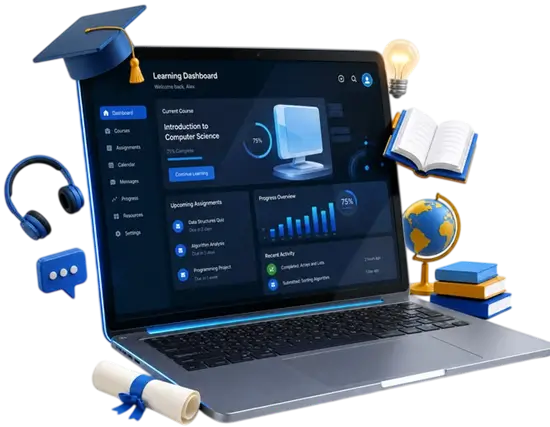 Sector 02EducationTutoring assistants, marking support and admissions workflows that give staff time back for students.Explore Education
 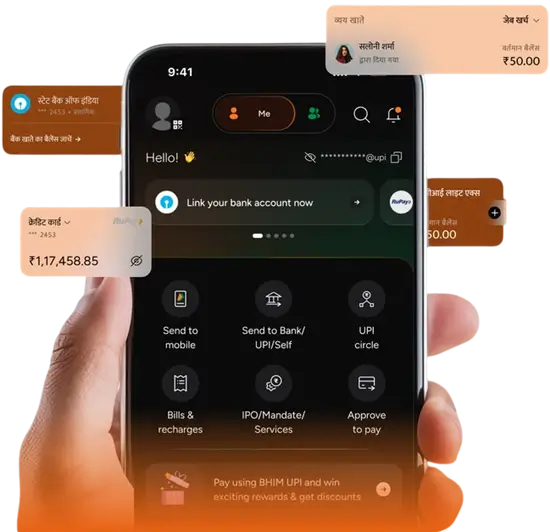 Sector 03Banking & FinanceDocument checks, reconciliations and customer queries — every decision logged and explainable to an auditor.Explore Banking & Finance
  Sector 04Retail & EcommerceProduct content, catalogue clean-up and support that answers from live stock and order data.Explore Retail & Ecommerce
  Sector 05Travel & HospitalityBooking changes, guest questions and itinerary handling, in the guest's language, at any hour.Explore Travel & Hospitality
  Sector 06Government & PublicCasework, correspondence and form processing built for accessibility, transparency and public records rules.Explore Government & Public
  Sector 07Startups & SMBsOne well-chosen workflow automated first, so a small team gets the leverage without an AI programme to run.Explore Startups & SMBs